Wicked Destiny: Elevating Brand Identity Through Atmospheric Typography
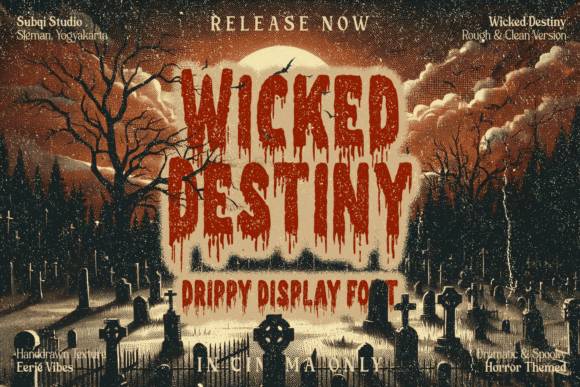
In the saturated landscape of digital marketing and creative design, the struggle for immediate visual impact is more intense than ever. Brands, creators, and entrepreneurs are constantly seeking ways to cut through the noise, not just with louder messages, but with deeper emotional resonance. This is where typography ceases to be merely a vessel for text and becomes a primary driver of narrative. Enter Wicked Destiny, a typeface that represents a significant shift in how we approach thematic design. It is not simply a font; it is a bold, drippy display tool featuring a rough, hand-drawn texture that oozes with eerie vibes, perfectly suited for projects that demand attention through atmosphere rather than just information.
The Evolution of Thematic Design in Modern Marketing
For years, corporate design leaned heavily on clean, sans-serif minimalism. The logic was sound: clarity equals trust. However, consumer preferences are evolving. There is a growing appetite for authenticity, rawness, and distinct personality in branding. This trend is particularly visible in industries ranging from entertainment and gaming to niche lifestyle products and experiential events. Audiences are no longer satisfied with sterile perfection; they crave texture, story, and mood.
Wicked Destiny fits squarely into this broader market shift. By offering a font that captures a chilling atmosphere with its dripping letters and uneven edges, it allows designers to tap into the psychological power of horror and mystery without sacrificing legibility or professional polish. The availability of both rough and clean versions ensures that the typeface can adapt to various workflow needs, bringing a dramatic and spooky feel to creative work while maintaining the flexibility required by modern design standards.
Why Texture Matters in Digital Communication
We live in a high-definition world, yet paradoxically, there is a renewed appreciation for the imperfect. The "rough" aesthetic signals human touch, effort, and uniqueness. When a brand uses a font like Wicked Destiny, it signals that it is not afraid to take risks. The hand-drawn texture serves as a visual metaphor for unpredictability and excitement, which are key drivers in sectors such as:
- Halloween and Seasonal Campaigns: Beyond simple decorations, major retailers and local businesses use thematic typography to create immersive shopping experiences.
- Horror and Thriller Media: From indie film posters to bestselling book covers, the font’s bloody, sinister touch aligns perfectly with genre expectations.
- Experiential Events: Escape rooms, haunted attractions, and themed parties rely on environmental graphics that set the tone before the guest even enters the venue.
Practical Applications for Creators and Entrepreneurs
Understanding the theoretical appeal of a typeface is one thing; integrating it into a practical workflow is another. For freelancers and agencies, Wicked Destiny offers a versatile solution for clients who need to stand out during specific campaign windows. Consider the case of a boutique coffee shop launching a "Midnight Roast" limited edition. Using a standard bold font might convey strength, but it lacks the narrative depth. Applying Wicked Destiny to the packaging and social media assets instantly transforms the product from a commodity into an experience. The dripping letters suggest richness, intensity, and a touch of the forbidden, appealing directly to consumers looking for more than just caffeine.
Similarly, in the tech and gaming sectors, user interface (UI) designers are increasingly incorporating thematic elements into landing pages for new releases. A game developer promoting a survival horror title can use the clean version of Wicked Destiny for headlines to ensure readability on mobile devices, while employing the rough version for promotional banners and merchandise. This dual-approach strategy respects the changing needs of users who consume content across multiple devices, ensuring that the aesthetic remains consistent without compromising accessibility.
Aligning with Consumer Expectations of Authenticity
Modern consumers are savvy. They can spot stock imagery and generic templates from a mile away. They are paying attention to brands that demonstrate a cohesive and thoughtful identity. The reason people are focusing on tools like Wicked Destiny is that it provides a shortcut to authenticity. It does not look like it was generated by a machine; it looks like it was crafted. This perception of craftsmanship builds trust and engagement.
Furthermore, the versatility of having both rough and clean versions addresses a critical pain point in professional workflows: consistency. Designers often struggle to maintain a brand voice when switching between large-scale outdoor advertising and small-screen digital ads. With Wicked Destiny, the core identity remains intact regardless of the medium. The clean version ensures that the message is received clearly in fast-paced digital environments, while the rough version retains the artistic integrity needed for print and large-format displays.
The Business Case for Atmospheric Typography
From a business perspective, investing in distinctive typography yields tangible returns. Differentiation is a key competitive advantage. In a marketplace where products and services are increasingly similar, the emotional connection forged through design can be the deciding factor for a customer. Wicked Destiny enables businesses to carve out a unique niche. Whether it is a cybersecurity firm using dark, mysterious aesthetics to convey the hidden dangers of the web, or a fashion brand launching an edgy autumn collection, the font provides the visual language necessary to communicate complex ideas quickly.
Moreover, the trend towards immersive storytelling means that typography must do more heavy lifting. It must set the scene. When a marketer uses a font that oozes with eerie vibes, they are not just choosing a style; they are curating an environment. This is particularly relevant in the age of social media, where visuals are consumed rapidly. A post featuring Wicked Destiny stops the scroll because it disrupts the pattern of clean, white-space-dominated feeds. It demands attention through its sheer presence and texture.
Future-Proofing Creative Assets
As we look toward the future of design, the line between digital and physical continues to blur. Augmented reality (AR) and virtual reality (VR) experiences will require typography that can hold its own in three-dimensional spaces. Fonts with strong character and texture, like Wicked Destiny, are well-positioned for this evolution. Their distinct shapes and dramatic flair translate well into 3D modeling and motion graphics, allowing creators to build cohesive brand worlds that extend beyond static images.
Entrepreneurs and marketers should view the adoption of such specialized tools not as a fleeting trend, but as a strategic investment in their brand’s visual vocabulary. By understanding the psychological impact of dripping letters and uneven edges, professionals can craft campaigns that resonate on a deeper, more instinctual level. The goal is not just to be seen, but to be felt.
Conclusion: Embracing the Darker Side of Design
The rise of Wicked Destiny underscores a broader truth in contemporary design: context is king. While minimalism has its place, there is an enduring and growing market for the dramatic, the spooky, and the bold. For professionals willing to explore these darker aesthetics, the rewards are significant. By leveraging a font that combines technical versatility with strong atmospheric power, creators can deliver work that is not only visually striking but also emotionally engaging.
Whether you are designing a Halloween poster, branding a horror-themed podcast, or simply looking to add a touch of sinister elegance to your next project, Wicked Destiny offers the tools necessary to bring your vision to life. It is a reminder that in a world of endless content, the most memorable designs are often those that dare to be different, textured, and unapologetically bold. As industry standards continue to evolve, the ability to harness such specific, mood-driven typography will remain a valuable skill for any forward-thinking creative professional.